The size gets chosen on the site walk
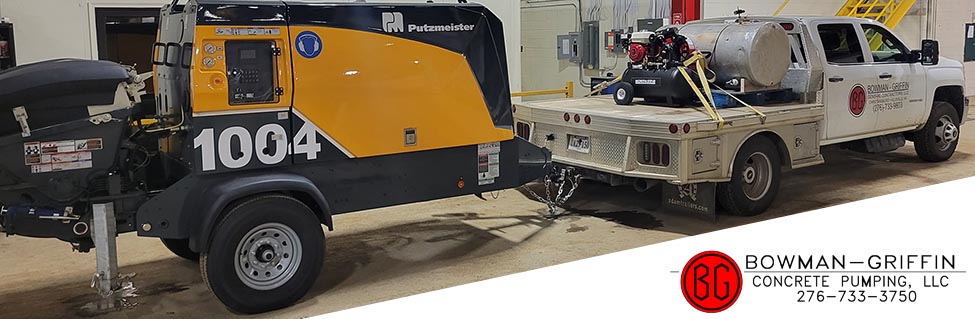
Both sizes come on the trailer, so nothing has to be decided over the phone. On the estimate visit we walk the route the concrete has to travel, from where the trailer can sit to where the finishers want the first yard to land. The narrowest point on that walk usually settles the question.
Think about it in that order. Route first, then size. If the way in is an open side yard and the pour is a large flatwork slab, the bigger line does the volume work with less strain and the crew keeps moving. If the way in squeezes down to a gate, or the placing end is a trench a man has to stand beside, the lighter line that steers by hand is worth more than the extra volume.
Plenty of jobs are not cleanly one or the other. A route can run open most of its length and then pinch near the end. That is a layout problem, not a reason to change the plan for the day.
What the line has to get through
The obstacles on a residential site repeat themselves job after job. Walk enough of them and you stop thinking about hose diameter in the abstract and start thinking about openings.
- A yard gate. Most take line without any fuss. What gets looked at is the swing, the latch post and what sits right behind it, because an opening you can pass and a route you can lay line along are different things.
- A door opening. Line goes in a door and concrete gets placed inside a wall that is already standing. Thresholds, storm doors and door stops get sorted before the trucks come.
- A window opening. On a foundation wall with the deck not on yet, an opening is often the cleanest way in, with the crew inside taking the discharge end.
- A footing trench. Somebody walks the line down the length of it, over steel and around form stakes, filling as they go. Handling matters more than volume in a trench.
- Between two houses. Older lots leave a narrow side yard, a foundation on one side and a fence on the other. The line goes down it on the ground.
- Down a bank. Hose gets laid down a grade so the truck stays up top where the ground is solid and the pour happens well below it.
Sections clamp on, and they come back off
Hose comes in sections that clamp together, which is the part most homeowners have never pictured. The layout is not one fixed length of pipe that either reaches or does not. It gets built on the spot out of what the route asks for. Sections go on to get around the house, and come back off when the pour sits closer than the plan assumed.
That is why bends stay long and sweeping, and why the whole route gets run before any concrete is on the road. A layout thrown together while a loaded truck idles is where a day goes wrong.
It also means the day can absorb a surprise. Forms move a few feet, or a gate turns out to be blocked from the far side. Sections come off, sections go on, and the route gets rebuilt to the site as it is that morning.
What to clear before pour day
Most of what a homeowner can do for a pump day has little to do with the machine and everything to do with the route. The line lies on the ground for the length of the pour, so anything on that path is in the way, and anything you would rather keep clean should not be beside it.
- Unlock the gate, and swing it open. A latched gate on pour morning costs everybody standing there time they do not have.
- Move what moves: patio furniture, the grill, planters, hose reels, toys, trash cans, anything leaning against the side of the house.
- Keep dogs and small children on the other side of the house. There is pressure in that line and a crew working at pace behind it.
- Look up as well as down. Low limbs, a clothesline, a downspout elbow, anything a man carrying hose has to duck or step over.
- Say what you care about. A fresh bed of mulch, a paver walk, a deck, a finished garage floor. Told in advance, we route around it or plan the crossing.
Weight, and what the line rests on
Empty hose is a two person carry. Full of concrete it is a different animal, and it stays where it was laid. That is the plain reason a layout gets settled before the first yard goes in.
It also shapes how we treat whatever is already finished. Hose is far kinder to a yard than a loaded ready-mix truck is, which is most of the reason the pump exists. It is not nothing, though. It rests on whatever it crosses for the length of the pour.
So the crossings get picked on purpose, in a spot chosen with you. The same thinking applies inside, at a threshold or on a finished floor next to the pour.
Rising ground and bends are planning, not a limit
Every bend in the line and every foot the concrete has to climb works the machine harder. Both are ordinary. Neither is a wall. Hose gets carried up a bank, run over a low wall or laid down a grade, and lots in this part of Virginia rarely hand you a flat, straight shot at the forms.
What they change is the planning. A route with a climb and several turns in it is slower, harder work than the same run across level ground, so it gets laid out with that in mind and the pace at the machine gets set to what the crew can screed.
A long walk from the road works the same way, a question of sections and planning rather than a fixed number we quote at people. Describe the slope and the way in when you call, and the layout gets worked out ahead of the day instead of on it.
Washout gets picked before anything starts
When the last yard is placed, the line has to be cleared and the hopper washed. What comes out of both has to go somewhere, and that somewhere is a decision made in advance, not something sorted out at the end of a long morning.
A washout spot wants to be off anything finished, well clear of a storm drain, and somewhere you do not mind a patch of material setting up. On a rural lot there is usually a corner that suits it. On a tight town lot it takes more thought, which is one more reason it gets settled early.
Tell us the tight spots, not the square footage
When you call about a pour that might need a pump, the useful details are the ones about the route. Where can a truck and trailer sit. What is between that spot and the forms. Is there a gate, a door opening, a trench, a bank. What is on the ground you would rather keep clean.
From that we can tell you which line fits your site and what the layout is likely to look like. We will also tell you when the truck backs right up, the chute reaches fine, and you do not need a pump at all. Estimates on our own work are free and come to you in writing.