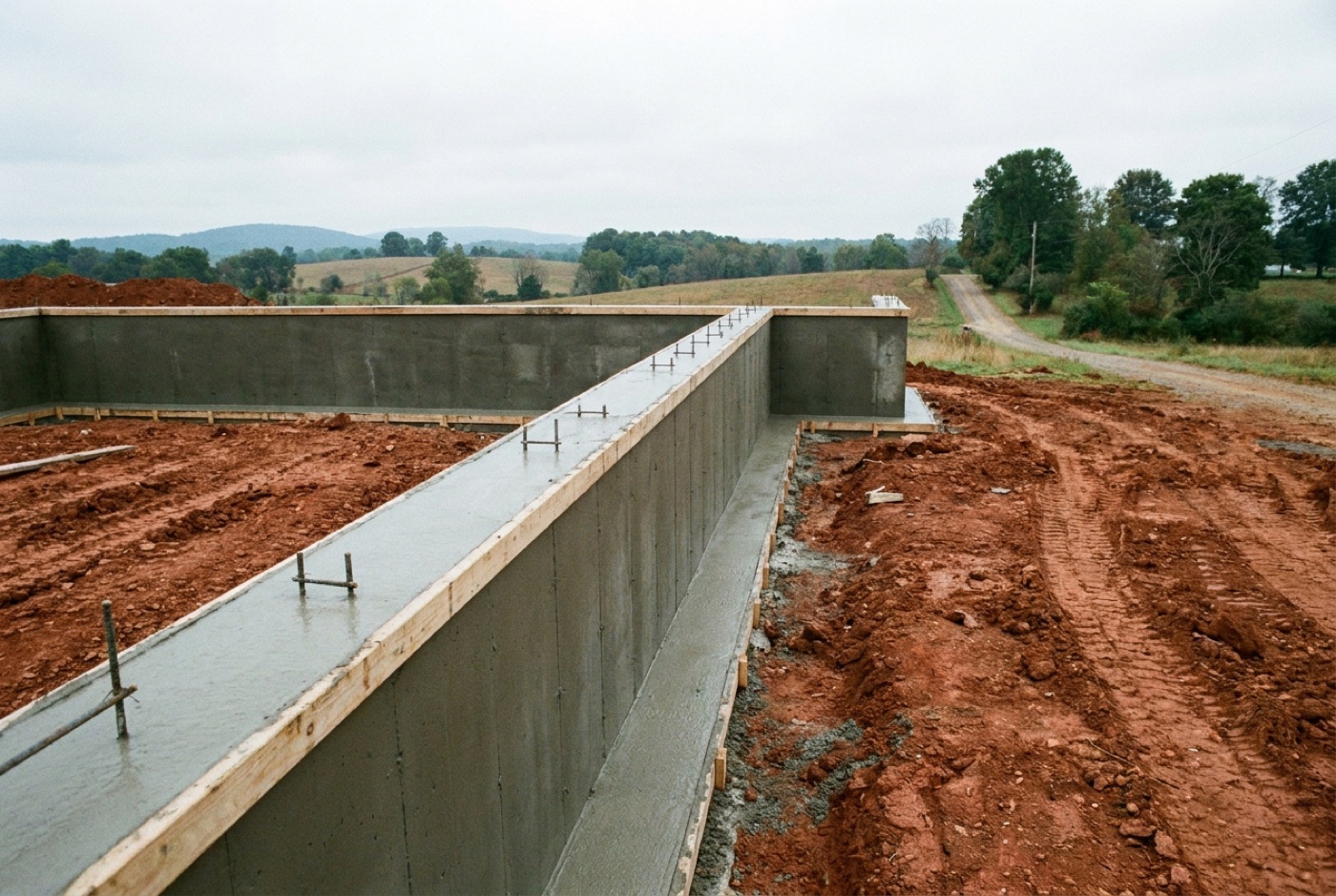
How the sub arrangement works
We do not hand the machine over to anybody. We bring it and we run it. Our pump, our operator, our hose guy, on your job, on your schedule. You run the pour. You order the concrete, you set the forms, you screed and float and finish. We show up with the trailer line pump, set up where the concrete needs to land, prime, and place it exactly where you point.
That split keeps the day clean. Your crew does not have to learn a machine they touch a few times a year. Nobody on your payroll is stuck babysitting a hopper while the flatwork gets away from them. Our operator runs this pump every week, so setup, priming, cleanout and the small problems that show up mid pour are routine here instead of a surprise.
We work as your sub, which means your customer stays your customer. We show up, the concrete goes where you want it, and we go. We are not out there handing cards to your homeowner or pricing the next phase of your job behind your back. If somebody on site starts asking us questions about the scope, we point them back to you.
We work this way for general contractors, footing crews, flatwork crews, ICF builders and pole barn crews. Residential and commercial both. It does not matter much to us whether the pour is a basement floor behind a house or a commercial slab with trucks staged out on the road. What matters is that the concrete gets placed on time and lands in the right spot.
What to send us before pour day
Give us the details up front and pour day gets boring, which is what everybody wants. A quick call or a text with the basics is plenty. Here is what we ask for.
None of it has to be exact to the yard when you first call. If the slab grows, the footings run deeper than planned, or the plant swaps your mix, tell us as soon as you know. We would rather adjust the plan two days out than sort it out standing in the driveway with trucks on the way.
- Site address, plus access notes: gate widths, grade, soft ground, overhead wires, and where we can set the trailer.
- Yardage, and what it is going into: footings, poured walls, slab on grade, basement floor, pole barn pad, commercial flatwork.
- Mix and slump. Aggregate size matters to us, so say if it is a pea gravel mix, a fiber mix, or anything with an admixture that changes how it moves through line.
- Which plant is supplying, and how far out that plant is from the site.
- Truck spacing and truck size, so we know how fast the concrete is coming at us.
- Start time, and whether you want us on site early to set up before the first truck.
- Anything unusual: pumping uphill or downhill, a long line pull through a side yard, or a second setup on the same job.
Scheduling around your ready-mix window
Concrete work runs on the plant's clock as much as yours. Get us your date and your requested delivery time as soon as you have them, and we will build our day around your window. In busy weeks the plants push start times around, so the earlier we are on the calendar together, the better your odds of getting the truck spacing you actually asked for.
We plan to be on site and set up before the first truck rolls in. Priming and hose layout happen before concrete shows up, not during it. If your window moves, call us. A start time that shifts a couple of hours is a normal day in this business, and it is a lot easier to work with when we hear about it early instead of at the last minute.
Back to back pours are worth flagging early. If you have footings one morning and the slab later that week, give us both dates at once and we will hold them together. Same goes for a job that needs two setups in one day, or a pour that might get split if the plant cannot keep trucks coming.
Weather is the other variable. Southwest Virginia hands you cold mornings, hot afternoons, and rain that comes in sideways off the Blue Ridge. If you are pushing a pour ahead of a forecast, say so, and we will tell you honestly what we can move and what we cannot.
Why crews sub the pumping instead of owning a pump
Plenty of contractors have thought about buying a pump. A few of them should. Most are better off subbing the pumping out, and the reasons are not complicated.
Most crews rent one when they need it. We own ours, and our operator runs it week in and week out. You get the machine and the experience together, on the pours where you need them, without any of the ownership headaches attached.
- Capital. A pump is a serious piece of equipment sitting on your books, tying up money you could put into forms, trucks or payroll.
- Maintenance. Hoses wear, clamps wear, the hopper and the cylinders wear. Somebody has to stay after it, and that somebody usually already has a full day.
- Cleanout. Every pour ends with a full washout whether anybody feels like it or not. Skip it once and you own an expensive problem.
- Operators. Running a line pump well comes from repetition. A crew that pumps a handful of times a year never quite gets there.
- Utilization. Unless you are pumping constantly, the machine spends most of the year parked and losing value.
What the 2.5 and 3 inch line handles
Our pump is a trailer line pump running 2.5 inch and 3 inch hose. That line size covers a wide range of work: narrow footings, poured walls, garage and shop slabs, basement floors, sidewalks and steps, pole barn pads, and big flatwork pours on the commercial side.
The real advantage is reach where a truck cannot go. Hose snakes through a gate, around the corner of a house, down a side yard, through a walkout, across a finished lawn without tearing it up. Backyard slabs and basement floors are the classic case. So are lots on Blue Ridge terrain where the driveway is gravel, the grade is steep, and there is exactly one spot the ready-mix truck can sit without getting stuck in red clay.
A pump usually earns its keep when the pour is a foundation, when it is roughly 8 or more cubic yards, or when the truck simply cannot get close enough to chute it. If your job hits one of those, a line makes the day shorter and the placement cleaner. Some outfits run boom pumps, and there are pours where a boom is the right tool: high work, or long reach up over an obstacle. If that is your job, we will tell you straight rather than talk you into a line that does not fit.
Showing up and staying running
Everything about a pumped pour depends on the pump getting there and staying running. That is the whole job, and we treat it that way.
Fuel, hose, clamps, cleanout gear and spare parts are all on us. You do not need to source anything for the pump or work it into your material order.
We arrive on schedule, get set, and prime before your first truck backs in. We keep the line moving so trucks are not sitting on the clock waiting on us. If something needs attention mid pour, our operator handles it and tells you what is happening instead of leaving your finishers guessing at the far end of the slab.
We wash out where you tell us to wash out, and we leave a site the way a contractor wants a sub to leave it. No mystery slurry in somebody's yard, no hose dragged back across fresh concrete, no argument about who is cleaning up what.
We also know what it costs you when a sub does not show. Our name sits on a family of building companies out of Hillsville, and we work the same counties you do: Carroll, Grayson, Wythe, Pulaski, Montgomery and Floyd, up the I-77 and I-81 corridors into the New River and Roanoke valleys, and across the state line into Mount Airy and Surry County. Word travels fast around here. That is a good enough reason to be dependable.
How to get on the calendar
Call 276-733-3750 with your date, your address and your rough yardage, and we will tell you what we have open. Rough numbers over the phone are fine to start. If you want it on paper, we will put together a clear written quote for the pumping so you have a firm number to build your bid around, usually within a day or two.
If you are still bidding and you are not sure whether the pour needs a pump at all, call anyway. Access, yardage and what you are pouring into usually settle the question in about two minutes. We would rather talk it through now than have you find out the hard way on pour day.
And if you want more than placement, we take complete scopes too. Our crew forms, pours, pumps and finishes: driveways, patios and walkways, garage and shop slabs, slabs and foundations, footers, poured walls, stamped and decorative work, commercial flatwork, sidewalks and steps, and tear-out and replacement. We spec strength to the load, commonly a 4,000 PSI air-entrained mix built for Virginia freeze-thaw. Workmanship warranty in writing, with exact terms confirmed on your written estimate.